
Doctor Corey Bickler Talks About Same Day Crowns
Dental Crowns and Bridges
Restore Your Smile & Oral Health
Complete Your Smile With Dental Crowns & Bridges in Salem, OR
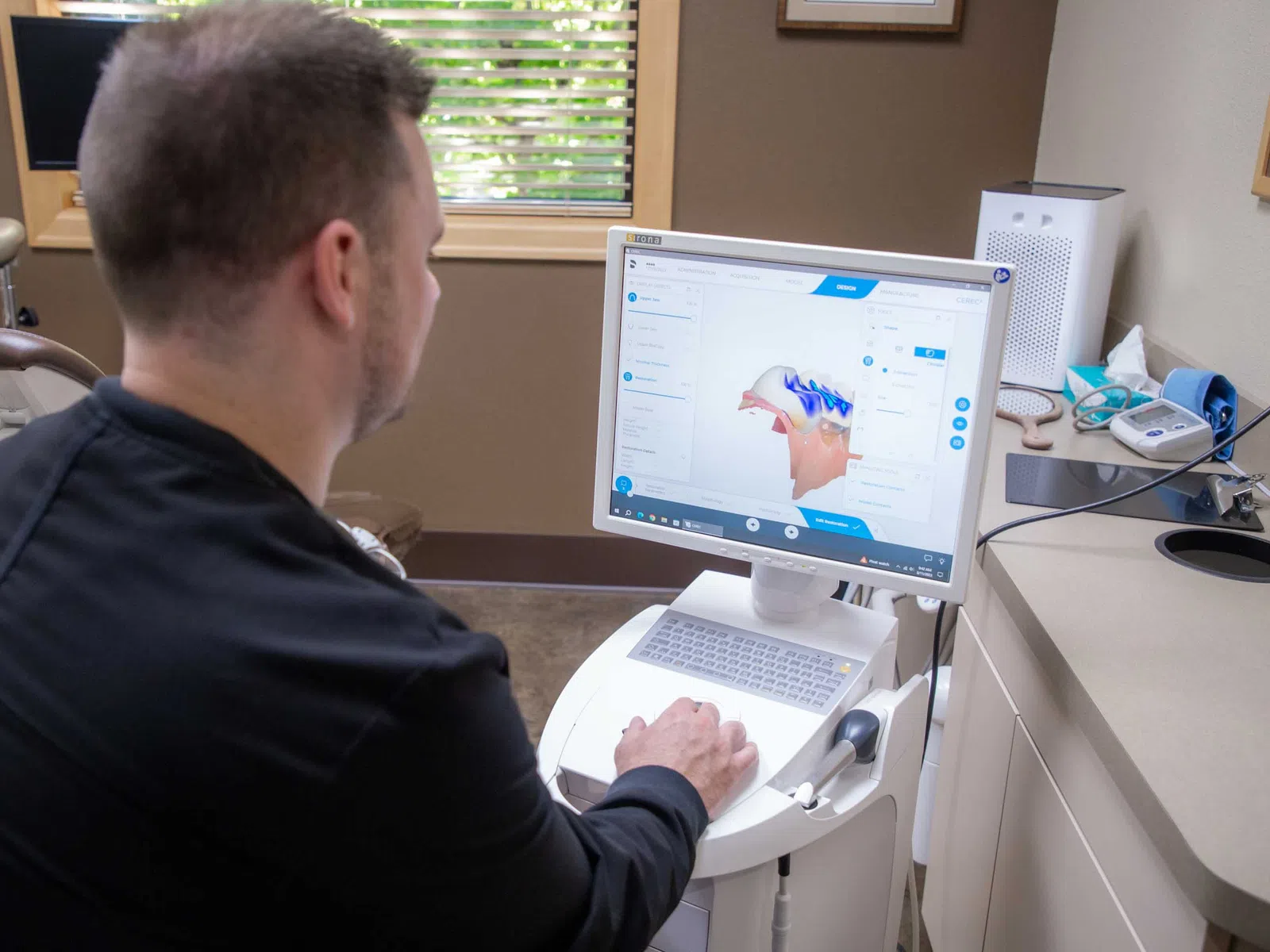
A decayed, damaged, or missing tooth can change your entire oral function. You may start chewing on the opposite side and avoiding certain foods. Restoring that space helps you get back to eating and smiling without thinking about your teeth. Dr. Bickler uses dental crowns and bridges in Salem to rebuild strength and replace missing teeth. Our technology also makes the process more convenient. We use digital impressions instead of messy molds. Our CEREC system allows us to create many restorations right in our office. No insurance? Join our VIP Club for savings on care.
Find the Right Restoration for Your Dental Needs
Dr. Bickler will recommend a crown or bridge based on your unique oral health needs. Your dentist will examine your tooth, oral function, and any remaining healthy structure that can be saved.
You'll find that we care deeply about the materials used in restorative treatment. Our team ensures dental crowns and bridges in Salem look good and function well.
Same-Day Dental Crowns
A crown covers and strengthens a damaged tooth. With our CEREC system, we can create many crowns from e.max lithium disilicate ceramic while you wait. Dr. Bickler can place the final restoration during the same appointment.
Traditional Fixed Bridges
A fixed bridge fills the gap left by a missing tooth or teeth and is anchored to the supporting teeth on either side. Your finished restoration provides a stable replacement that stays in place.
Implant-Supported Crowns
If a dental implant has replaced the root of a missing tooth, a custom crown can complete the restoration above the gumline. This gives you back a visible tooth and functional biting surface.
Implant-Supported Bridges
Dental implants can support a bridge when multiple teeth are missing. This approach fills the open space without requiring your dentist to modify healthy neighboring teeth for support.
Dental Inlays
An inlay can restore damage located within the raised cusps of a tooth. It may provide an option when a standard filling is not sufficient, but full crown coverage is unnecessary.
Dental Onlays
An onlay restores a larger portion of the tooth and can extend over one or more cusps. It allows us to rebuild greater damage while preserving healthy tooth structure when possible.
Frequently Asked Questions About Dental Crowns and Bridges
Q What is the difference between a dental crown and a bridge?
The difference between a dental crown and a bridge is their function. A dental crown covers and protects a single damaged tooth, restoring its strength and appearance. A bridge, on the other hand, replaces one or more missing teeth. It anchors a replacement tooth to the natural teeth or to implants on either side of the gap.
Q How long do dental crowns and bridges last?
Crowns and bridges typically last five to seven years, and often much longer. It depends on factors such as their location, the material used, and your eating habits. Frequently eating sticky, hard, or crunchy foods can shorten the lifespan of a restoration.
Q Can a crown be placed in a single visit?
Yes, some practices offer same-day crowns using in-house milling technology. This process designs and creates the crown from a digital scan without the need for fabrication at an outside lab. This eliminates the need for a temporary crown and a second appointment to place it.
Q What is an implant-supported bridge?
An implant-supported bridge is secured by two or more dental implants placed in the jaw, rather than being anchored to natural teeth. This option serves the same function as a traditional bridge, filling the gap left by missing teeth, without requiring any modification to healthy surrounding teeth.
Q Are crowns and bridges noticeable?
Crowns and bridges are designed to blend in with your natural teeth. Materials like e.max ceramic closely mimic the color and translucency of tooth enamel. Shade-matching also ensures the restoration blends in with your smile.
Q Will getting a crown require removing healthy tooth structure?
Placing a crown requires removing a portion of the outer tooth to make room for the restoration. However, only the necessary amount is removed to create a stable foundation. Your dentist works to preserve as much healthy structure as possible during tooth preparation.
Q Is sedation available for crown or bridge procedures?
Yes, many practices offer sedation options for patients who feel anxious about getting a crown or bridge. This can help make the appointment more comfortable, whether you're receiving a crown, a bridge, or another restorative procedure.
Q Will insurance cover dental crowns and bridges?
Many dental insurance plans cover at least a portion of crown and bridge treatment, often around half the cost, though coverage varies by plan. It's a good idea to check with your insurance provider before treatment begins so you know what to expect financially.


