
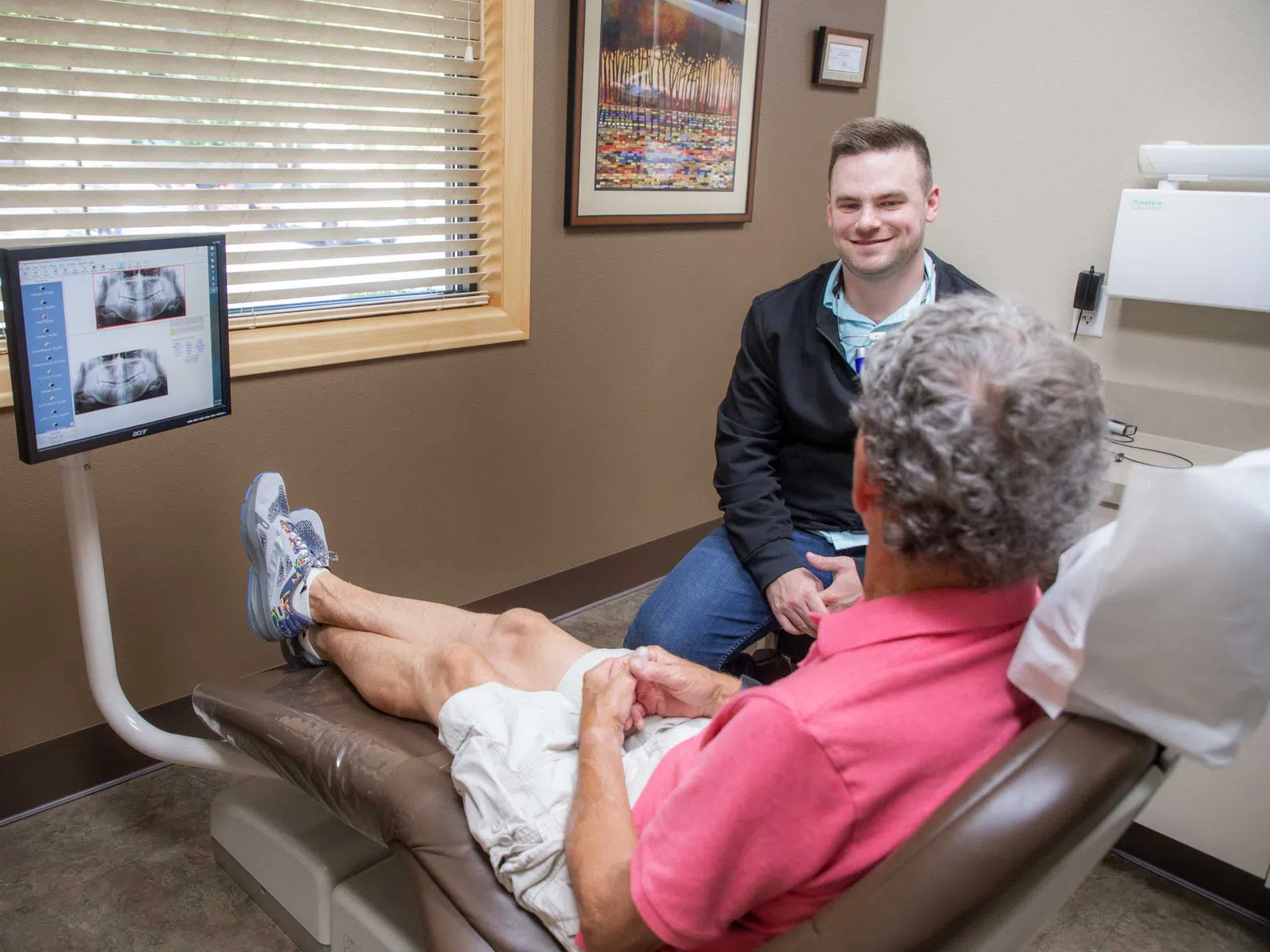
Doctor Corey Bickler Talks About Root Canals
Root Canals
Keep Your Tooth Intact
Find Relief From Pain With Root Canals in Salem, OR
Severe tooth pain can make it hard to eat, sleep, work, or think about much else. If infection has reached the soft tissue inside your tooth, removing the tooth is not your only option. A root canal in Salem can remove the infected tissue and relieve the source of your discomfort. At Bickler Dentistry, Dr. Bickler understands that the words "root canal" can make you nervous. Our approach changes that experience. We numb the treatment area and offer sedation when needed. You can even enjoy simple comforts to help you relax. We'll make sure you feel at ease as we restore your strong smile.
Feel Comfortable About Getting a Root Canal
Understanding the process can make root canal treatment feel less intimidating. Our team explains each stage and takes steps to keep you comfortable. Sedation is available, if needed. Dr. Bickler will remove the infection and prepare your tooth for restoration.
Because we use CEREC technology, we can create your crown while you wait. You won't have to return for a second appointment for your fully restored tooth. We make getting root canals in Salem at Bickler Dentistry as easy as possible.
Keep You Comfortable
We numb the treatment area with local anesthesia before beginning. If you are particularly anxious, we can also discuss sedation options to help you relax.
Reach the Infected Tissue
Dr. Bickler creates a small opening that allows him to access the pulp chamber inside your tooth. This provides a path to the infected or inflamed tissue.
Clean the Inside of Your Tooth.
Your dentist carefully removes the affected pulp and cleans the internal spaces. The area is also treated to help eliminate bacteria before the tooth is sealed.
Seal the Tooth
After cleaning, Dr. Bickler fills the internal space with a rubber-like dental material. Sealing the canals helps protect the treated area from reinfection.
Rebuild the Tooth
We normally recommend protecting a root canal-treated tooth with a dental crown. With CEREC, we can often digitally scan, design, and mill your crown right in our office.
Common Questions About Root Canals
Q What is a root canal?
A root canal is a treatment used to remove infection from the pulp, the soft inner tissue of a tooth, when decay or injury has allowed bacteria to reach it. The infected tissue is cleaned out, and the area is sterilized. The tooth is sealed to prevent the infection from returning, thereby preventing the need for extraction.
Q Why would I need a root canal?
A root canal becomes necessary when the pulp inside a tooth becomes infected or inflamed, often due to a deep cavity, a crack, or an injury to the tooth. Left untreated, this infection can spread and cause more serious oral health problems. A root canal is typically recommended to protect the tooth and surrounding areas.
Q Are root canals painful?
Despite their bad reputation, most patients find a root canal no more uncomfortable than getting a filling. Local anesthesia numbs the area completely during treatment, and sedation options are typically available for patients who want extra help staying relaxed. The procedure is designed to relieve pain, not cause it.
Q What happens if I don't get a root canal?
If you don't get a root canal, the infection can spread further into the jaw and surrounding tissue, potentially leading to more serious health complications. Without treatment, the tooth will eventually need to be extracted, which can also affect the health and position of neighboring teeth.
Q How long does a root canal take?
A root canal typically takes one to two hours, depending on the location of the tooth and the complexity of the infection. If a same-day crown is being placed afterward, the total appointment time may be longer, though this saves you from needing a separate visit later.
Q Will I need a crown after a root canal?
In most cases, a crown is typically recommended after a root canal. It protects and strengthens the treated tooth, since removing the infected pulp can leave it more fragile. Some practices can design and place a crown the same day using in-office technology, avoiding a second appointment.
Q What's the difference between a root canal and a tooth extraction?
A root canal and a tooth extraction differ in their purpose. A root canal removes the infection while preserving your natural tooth, whereas an extraction removes the tooth entirely. Saving the natural tooth through a root canal is generally preferred, since extraction can lead to bone loss and shifting of neighboring teeth over time.
Q How long is recovery after a root canal?
Most patients return to normal activities within a day or two after a root canal. Some mild soreness or sensitivity around the treated area is common initially and typically improves within a few days. Over-the-counter pain relief is usually enough to manage any discomfort during recovery.


